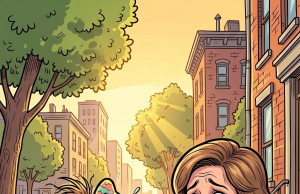
The blind girl had never seen the world, but she felt its cruelty with every breath. She was born into a family where appearance was valued above all else. Her two sisters were admired—their eyes were called a “gift,” their smiles, the “pride of the family.” But she was seen as a mistake. A burden. A reminder that life isn’t all about beauty.
When she was five, her mother died—the only person who held her hand and told her that darkness doesn’t make you worse. After that, her father changed. He became cold and irritated, especially toward her.
He never called her by her name. To him, she was simply “it.” He didn’t want to see her at the table and hid her in her room every time guests arrived. He was convinced that blindness was a curse.
When the blind girl turned twenty-one, her father made a decision that would ruin her life.
One morning, he walked into her small room. She sat on the bed, slowly running her fingers over the pages of an old Braille book.
“You’re getting married tomorrow,” he said dryly.
She froze. The words hung in the air, meaningless. Married? To whom?
“A beggar from the street,” her father continued. “You’re blind, he’s poor. A perfect match.”
She felt as if the ground had fallen from under her feet. She wanted to say something, but couldn’t. Her father never asked her opinion. She had no choice.
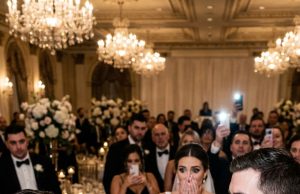
The next day, everything happened quickly. A small ceremony in the courtyard, a few indifferent witnesses, muffled laughter. She couldn’t see the groom’s face, and no one described him. Her father simply pushed her forward and ordered her to take the beggar’s hand.
People whispered, covering their mouths: “A blind woman and a beggar… What a couple.” Some smirked, others looked at her with pity.
After the ceremony, her father thrust a small bag of clothes into her hands, pushed her toward the man again, and said one last thing:
“Now she’s your wife and your problem, live as you wish.”
And he left without even looking back. 😢😱 But what happened soon after was a real shock to everyone.
From that day on, the blind girl lived in a tiny room next to the mosque. There was no luxury, but it was quiet.
The beggar man never raised his voice, always asked if she was comfortable, and every evening he described in detail what the day had been like: the color of the sky, the scent of the trees, the people who passed by.
Several months passed.
One day, her father overheard a conversation in the market. People were discussing a strange man who regularly gave large sums to the poor, but lived like a simple beggar. They said he had renounced his inheritance so he could marry conscientiously, not for convenience.
My father turned pale when he realized who they were talking about.
That same evening, he arrived at their house. He was met not by a beggar, but by a confident man in expensive but modest clothes. A blind girl stood next to him—calm, confident, with an upright posture.
She held her husband’s arm, and for the first time in her life, there was no fear on her face.
“I’m not poor,” the man said calmly. “I simply wanted a woman by my side who sees with her heart. And I found her.”
Her father tried to speak, but the blind girl beat him to it.
“You called me a curse,” she said quietly. “But it was blindness that taught me to discern the true worth of people.”
Her father stood there, speechless.