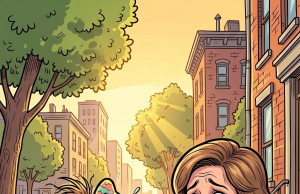
I was slicing vegetables for dinner when my four-year-old wrapped both hands around my forearm and tugged—gentle, but urgent. Her eyes looked too serious for her face.
“Mommy… can I stop taking the pills Grandma gives me every day?”
For a second, the kitchen didn’t feel like a kitchen anymore. The light from the window, the hum of the fridge, the smell of onions—everything went distant, like someone had turned the volume down on my life.
“The pills?” I repeated carefully, keeping my voice calm even as my pulse started hammering. “What pills, sweetheart?”
“The ones in my room,” Emma whispered. “Grandma Diane says they’re vitamins to help me grow. But… sometimes my tummy hurts after, and then I get sleepy. Like… super sleepy.”
A cold wave climbed up my spine. Diane had been staying with us for three weeks while she recovered from knee surgery. She’d insisted on helping with Emma so I could “breathe.” She brushed Emma’s hair with slow, gentle strokes. She read bedtime stories like she’d been practicing for an audience. She offered snacks, packed little fruit plates, kept saying things like, “Let Grandma spoil you.”
And now, apparently, she had also been giving my daughter “vitamins.” Every day.
I forced my face into something soft, something safe for Emma to look at. I knelt so we were eye-level and tucked a loose curl behind her ear.
“Can you do something for me?” I asked. “Can you bring me the bottle? Right now.”
Emma’s mouth tightened with worry. “Am I in trouble?”
“No,” I said instantly, pulling her into a hug. “Never for telling me the truth. If something feels weird or scary, you always tell Mommy. That’s what brave kids do.”
She nodded and hurried down the hall.
The second she vanished around the corner, I gripped the edge of the counter so hard my fingers hurt. Diane had mentioned vitamins in passing, casually—I already gave Emma her vitamins. She said it like it was the most ordinary thing in the world, like she was telling me she’d put a load of laundry in.
I’d believed her because it was easier than questioning her. Because she sounded so certain. Because she was family.
Emma came back holding an orange prescription bottle with both hands like it was fragile. She offered it up like a confession.
“This one,” she said.
I took it. The label was turned outward.
My mouth went dry as I read the name—long, clinical, unfamiliar. The dosage instructions didn’t say chewable. It didn’t say children. It said numbers and milligrams and cautions that didn’t belong anywhere near a preschooler.
And printed clearly under the medication name was a patient’s name.
Diane Patterson.
Adult dosage instructions.
My fingers started trembling so badly I had to sit at the table to keep the bottle from slipping out of my hand. I turned it over, then back again, as if flipping it could change what it said.
It didn’t.
“Emma,” I asked, making my voice steady through sheer will, “how many does Grandma give you?”
“One,” she said. “Every night before bed.”
“Every night,” I echoed, and even saying it made my stomach twist.
Emma lowered her voice like she was sharing something precious. “She said it’s our secret. She said not to tell you… because you worry too much about silly things.”
My chest tightened so hard it felt like someone was pressing a fist into it from the inside.
A secret. About medicine.
I unscrewed the cap and looked inside. The bottle was nearly half empty. According to the refill date on the label, it had been filled just ten days before Diane arrived.
There was no universe where Diane could have taken that many pills herself.
I didn’t know exactly what the medicine was. But I knew enough to understand the basics: a four-year-old does not take an adult prescription unless a pediatrician says so. And our pediatrician had never said so.
“Shoes,” I said, standing so fast the chair scraped. “Put your shoes on, baby. We’re going to Dr. Stevens.”
Emma’s eyes filled. “Did I do something bad?”
I crouched and held her small face in my hands. “No. You did something important. You told me. Mommy is proud of you.”
She sniffed and nodded, wiping her cheeks with the back of her hand the way she always did.
The drive to the clinic took twelve minutes that felt like an entire lifetime. Emma hummed in the backseat, swinging her feet, oblivious to the storm gathering in my mind. I called the office with one hand on the wheel and explained in broken sentences that my mother-in-law had been giving my child a prescription medication labeled for an adult.
The receptionist’s tone shifted so quickly it made my skin prickle.
“Come in now,” she said. “We’ll take you immediately.”
We were ushered into an exam room within minutes. Dr. Stevens was usually calm in the way you hope doctors are calm—steady voice, gentle smile, the kind of person who made anxious parents feel grounded.
He listened while I spoke, nodding slowly, taking in the details.
Then I handed him the bottle.
His face changed so fast it startled me.
The color drained from his skin as he read the label. His jaw tightened. His hands trembled—small at first, then noticeably, to the point he had to brace the bottle against the table.
Emma watched him, wide-eyed.
Dr. Stevens set the bottle down with a sharp, controlled motion. Not violent, but furious—like he was containing something that wanted to explode.
“Do you know what this is?” he demanded, voice tight. “Who gave this to your daughter?”
“My mother-in-law,” I said, my throat burning. “She told us they were vitamins.”
Dr. Stevens inhaled slowly, like he was forcing himself back into professional mode.
“This is an antipsychotic,” he said, each word careful. “It’s prescribed for serious psychiatric conditions in adults. It is not a vitamin. It is not a supplement. It is not something a four-year-old should be taking unless under very specific, specialized medical supervision—and even then, it’s rare and closely monitored.”
The room tilted.
Antipsychotic.
My brain tried to reject the word, like it didn’t belong in my life.
Emma’s fingers curled around the edge of the paper sheet on the exam table.
Dr. Stevens softened his tone and turned to her. “Sweetheart, can you tell me how you feel after you take it?”
Emma kicked her feet lightly. “My tummy hurts sometimes. And I get sleepy. And sometimes I feel… slow.”
Dr. Stevens examined her thoroughly—reflexes, coordination, heart rate, blood pressure. He asked about her appetite, her sleep, her mood. He watched her eyes track his finger and listened to her speak.
Every test felt like a coin toss between relief and dread.
When Emma was distracted with stickers, Dr. Stevens pulled me a few steps away and lowered his voice.
“I’m reporting this,” he said. “This is medical abuse. I’m also recommending we admit her for observation and do bloodwork. I need to know how much is in her system.”
I stared at him, the words medical abuse ringing in my ears. “Will she be okay?”
“I can’t promise anything until we see results,” he said gently. “But the sooner we stop it and monitor her, the better.”
The hospital intake felt surreal. Nurses moved with practiced efficiency. Emma, to her credit, treated it like an adventure. She told a nurse her favorite color. She asked if the stickers were free. She wanted to know if the bed went up and down.
I sat beside her and tried not to fall apart.
I called my husband, James, in the hallway. He was out of town on a work trip and sounded distracted when he answered—until I spoke.
“James,” I said, voice shaking, “your mother has been giving Emma pills. Prescription pills.”
There was a pause. “What? No. She wouldn’t.”
I swallowed hard. “The bottle is labeled with her name. Dr. Stevens says it’s an antipsychotic. Emma’s being admitted.”
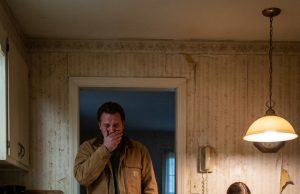
Silence. Then, quietly: “That’s… that’s Mom’s medication.”
My chest tightened. “For what?”
James hesitated too long.
“For her condition,” he said finally, defensive and uncomfortable. “She’s been stable for years.”
“What condition?” I pushed.
He exhaled sharply. “Paranoid schizophrenia. She was diagnosed before we got married. Medication keeps her level. She’s managed it a long time.”
My head swam.
“You never told me,” I whispered.
“I didn’t think it mattered,” he said, and his voice cracked on the last word. “She’s my mom. She’s… she’s fine. She’s been fine.”
“She’s been drugging our child,” I snapped, tears spilling now. “And telling her to keep it secret.”
“I’m coming home,” James said hoarsely. “I’m booking the next flight.”
Two hours later, a CPS investigator arrived. Patricia Wallace looked tired in the way people look when they’ve seen too much and learned not to show shock. She took notes while I explained everything.
“Where is Mrs. Patterson now?” Patricia asked.
“At our house,” I said. “I left straight from the kitchen.”
Patricia nodded. “I need to speak to her. Can you call her and ask her to stay there?”
My hand shook as I dialed.
Diane answered on the second ring, voice warm and pleasant. “Honey! How’s your afternoon?”
“Diane,” I said, steel entering my voice, “I need you to stay home. CPS is coming to speak with you.”
A pause. “CPS? Why?”
“You know why,” I said. “The pills you’ve been giving Emma.”
Silence, and then—soft laughter, like I’d made a ridiculous joke.
“Oh, those,” she said lightly. “Vitamins.”
“They are not vitamins,” I said, my voice rising. “They’re your prescription medication. Emma is in the hospital.”
Diane’s tone cooled. “You’re overreacting. That child is always bouncing off walls. You’ve been too soft with her. She needs structure.”
“You medicated her,” I said, almost choking on the words.
“She needed to calm down,” Diane replied with absolute conviction. “She interrupts. She makes noise. She throws little fits. The pills made her more manageable. I was helping you.”
Something inside me snapped cleanly in two—whatever lingering part of me had been trying to make sense of her.
Patricia, listening on speakerphone, stepped closer and spoke into the phone. “Mrs. Patterson, this is Patricia Wallace with CPS. Stay at the residence. I’ll be there shortly.”
Diane’s voice sharpened. “I want my lawyer.”
“That’s your right,” Patricia said evenly. “But leaving will complicate this.”
The call ended. Patricia looked at me, expression steady but grim.
“People who hide medication and call it ‘help’ are often very dangerous,” she said quietly.
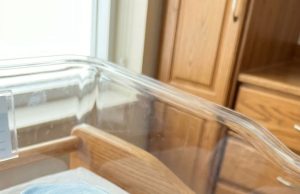
James arrived close to midnight. He looked wrecked—tie loose, shirt wrinkled, eyes red. We stood beside Emma’s hospital bed while she slept, small chest rising and falling under a thin blanket.
“How are the tests?” he asked, voice breaking.
“The medication is in her system,” I said flatly. “We don’t know long-term effects yet.”
James stared at his sleeping daughter like he was trying to rewrite time.
“Why didn’t you tell me?” I demanded, and the hurt finally came out sharp. “About your mother’s diagnosis?”
“I thought it was under control,” he whispered. “I didn’t want you to see her differently. I didn’t want to believe it could touch us.”
“It already did,” I said.
Dr. Stevens updated us the next morning. The good news: the dose Emma had been given appeared low, and the exposure was weeks—not months or years. Children can be resilient. He was cautiously optimistic that permanent physical harm was unlikely.
“The symptoms she’s shown—stomach discomfort, excessive sleepiness—fit,” he said. “But we’ll monitor for delayed effects over the coming months. Neurological checkups. Developmental screening. Therapy for the emotional impact.”
Therapy.
Because this wasn’t only about what went into Emma’s body. It was also about what went into her trust.
The legal process moved forward like a slow, grinding machine. Charges were filed. Diane insisted she’d done nothing wrong. Her attorney floated the idea that her judgment was impaired. The prosecution pointed out the detail that made my blood run cold every time I thought of it:
Diane had told Emma to keep it secret.
She knew we would say no.
That was awareness. That was intent.
In the end, Diane accepted a plea agreement: mandatory psychiatric treatment, probation, and a restraining order prohibiting contact with Emma.
Emma came home a few days later, physically stable—but changed. She flinched at the sight of any medicine bottle. She refused even kid-safe remedies when she had a fever, sobbing that she didn’t want “Grandma’s pills.”
Catherine Hayes, the child therapist, worked with Emma using play and drawings, teaching her simple truths: medicine is never a secret; adults don’t ask kids to hide important things from parents; Emma was brave for speaking up.
Emma improved slowly. Nightmares faded, then returned, then faded again. James and I tried to be steady, but our home had cracks running through it now, and we were learning where they were.
Then, months later—when life was just beginning to feel normal again—my phone rang with an unknown number.
“This is Gerald Kirkland,” a man said briskly. “I represent Diane Patterson. She wishes to discuss grandparent visitation.”
My stomach dropped. “No.”
“Mrs. Patterson has completed court-ordered treatment,” he continued, reading from a script. “She believes she is entitled to supervised contact.”
“She drugged my daughter,” I said, voice sharp. “There is a restraining order.”
“It expires in six months,” he replied calmly. “And state law allows grandparents to petition for visitation under certain circumstances.”
I hung up with my hands shaking and called our lawyer, Mitchell.
He didn’t sugarcoat it. “She can file. But the criminal case, the medical reports, the therapy notes—those are strong. No judge will ignore that easily. Still… family court can be unpredictable.”
The months leading to the hearing were awful. Emma’s anxiety spiked when she sensed our stress. James withdrew, haunted by memories of his childhood—moments he’d brushed aside for years.
“One time I was sick,” he confessed late one night. “Really sick. She insisted I was faking. Dad took me anyway. It was appendicitis. Emergency surgery.”
He stared into the dark like he was watching his past replay. “I rewrote it in my head. Told myself she was just strict. But… maybe she was never as stable as I wanted to believe.”
The night before court, I sat on the bathroom floor trying not to cry loudly enough to wake Emma. James found me and sat beside me, wrapping an arm around my shoulders.
“We protect her,” he said, voice rough. “Whatever happens, we protect her.”
The courthouse smelled like old paper and cold air. Diane arrived dressed like a picture of respectability—hair neat, conservative dress, soft smile. She didn’t look at James.
Her lawyer argued she’d changed. That she understood. That she wanted to rebuild the relationship “in a controlled environment.”
Mitchell’s response was calm and brutal. He presented the medical risk. The therapy notes about nightmares and fear of medicine. The CPS findings. And then, the letters Diane had written during treatment—full of justification, blame, and the same chilling message: she’d only been trying to “help.”
Judge Thornton, a stern woman with tired eyes, reviewed everything in silence. My heartbeat was so loud I felt it in my ears.
Finally, she spoke.
“Mrs. Patterson’s actions placed this child in danger,” she said, voice firm. “While completion of treatment is noted, the evidence suggests incomplete acceptance of harm. The child continues to experience anxiety related to the incident.”
Diane’s smile faltered.
“Grandparent visitation is denied,” Judge Thornton said. “The restraining order remains in effect.”
Diane stood abruptly, her chair scraping. “That’s not fair! She’s my granddaughter!”
“You lost that privilege,” the judge said, voice ice-cold, “when you medicated a child without parental consent and concealed it.”
Outside, James broke down in a way I’d never seen—quiet tears he couldn’t stop. He kept shaking his head as if saying no could change who his mother was.
“She still thinks she was right,” he whispered. “Even now.”
“I know,” I said, holding him. “And that’s why Emma can’t be near her.”
That night, Rachel—James’s sister—called screaming that we’d ruined Diane’s life. She called it a misunderstanding. A mistake. “Vitamins.”
I said one sentence that ended the conversation.
“They weren’t vitamins. They were pills that could have harmed my child. And I’ll choose Emma over your version of family every time.”
We didn’t speak again.
Time moved forward, because it always does. Emma’s laughter returned fully. Kindergarten brought friends and finger-painting and messy joy. The nightmares became rare. The fear of medicine softened, slowly, with Catherine’s help and our patience.
Two weeks after the court decision, we threw Emma a small birthday party at the park—balloons, cupcakes, the simple kind of happiness that feels sacred after you’ve nearly lost it.
James’s father, Ronald, came with a huge stuffed unicorn that made Emma squeal. While she ran off to show it to her friends, Ronald lowered his voice.
“She sent me another letter,” he admitted. “Pages about how she’s the victim.”
James stared out at Emma, eyes glassy. “She’ll never understand.”
Ronald sighed. “Mental illness is complicated. The medication helps, but it doesn’t erase everything underneath. I’m sorry I didn’t warn you more.”
James didn’t answer, because there wasn’t anything to say that could fix the past.
That night, after guests left and Emma fell asleep, she padded into the kitchen in her pajamas and handed me a paper covered in careful crayon lines.
“I made this at school,” she said proudly. “It’s our family.”
Three figures holding hands: me, James, and Emma. No grandparents. No extra faces. Just us, complete.
I taped it to the refrigerator where I could see it every day.
Because the hardest truth we learned wasn’t about medicine or courts or diagnoses.
It was this: family isn’t who shares your blood. Family is who keeps you safe. Family is who tells the truth. Family is who never asks a child to hold a secret that could hurt them.
And from that moment on, our family had one rule that would never bend again:
No secrets about safety. Not ever.